
A Brazilian butt lift, commonly called a BBL, uses fat removed by liposuction and transfers it to the buttocks. A central part of BBL recovery is fat survival: transferred fat cells need to establish a new blood supply in their new location.
Not every transferred fat cell survives. When some cells do not survive, they do not simply vanish. I explain below what happens biologically, why blood supply and pressure matter, and how issues such as oil cysts and fat necrosis can develop.
Key Takeaways
- Transferred BBL fat must establish a new blood supply to remain viable.
- Non-surviving fat cells break down, release oil, and are gradually cleared by the body.
- Direct pressure can damage transferred fat and interfere with blood supply during recovery.
- Oil cysts and fat necrosis are different outcomes that require professional assessment.
What Does “Fat Survival” Mean After a BBL?
During a BBL, fat is harvested from one area of the body, processed, and carefully placed in the buttocks as many small deposits. The transferred fat initially has limited support from the surrounding tissue. To remain viable, each deposit must develop an adequate blood supply.
Blood flow supplies oxygen and nutrients that living fat cells need. If a portion of the transferred fat does not receive enough blood supply, those cells may not survive. This is why surgeons focus on placing fat evenly rather than creating one large, concentrated mass.
The amount of fat that ultimately survives can differ from person to person. It is not accurate to promise that a fixed percentage will remain after every procedure. Individual healing and the quality of blood supply are important variables.
Where Does Non-Surviving BBL Fat Go?
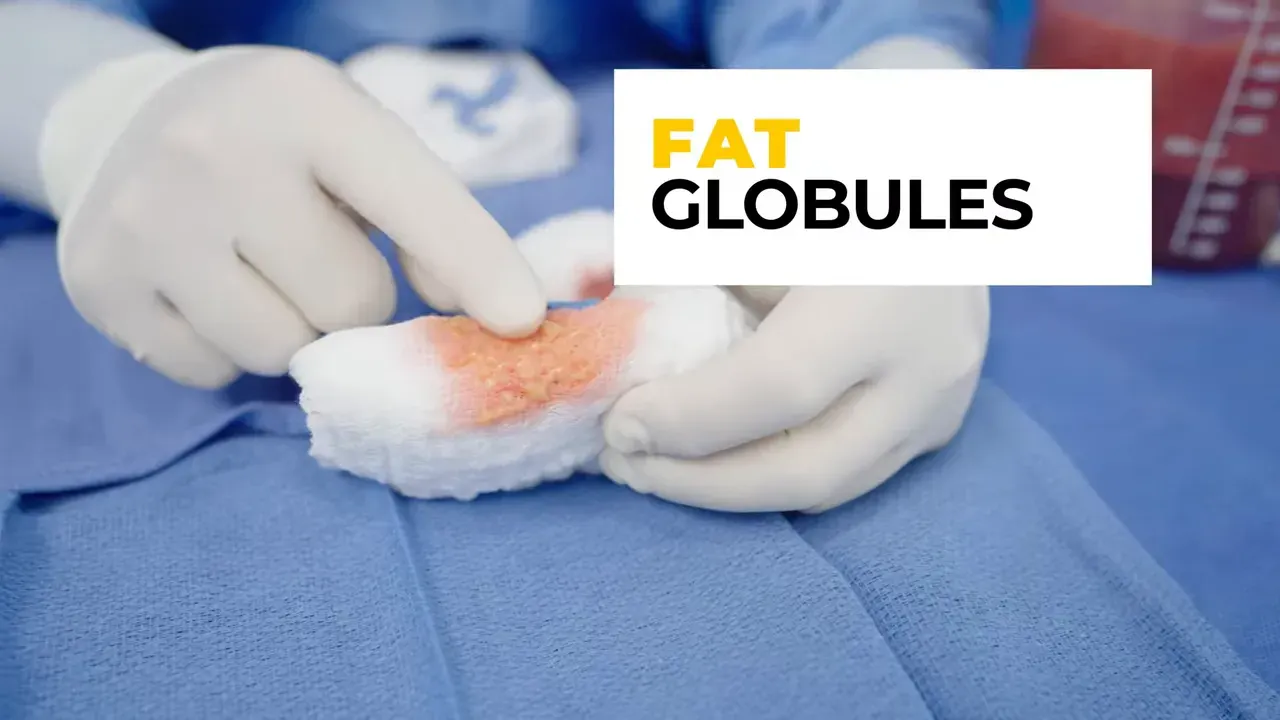
When transferred fat cells die, their contents are released. Fat cells contain oily material, so damaged cells can release oil into the nearby tissue. The body then begins a cleanup process.
Immune cells, including white blood cells, respond to the area and break down or collect the cellular debris and released oil. The body processes these materials through its normal metabolic and waste-removal systems over time.
In simple terms, the fat has not disappeared instantly. Instead, non-surviving cells break down, and the body gradually clears the byproducts as healing continues.
Why Do Some Transferred Fat Cells Not Survive?
Two closely related factors can interfere with fat survival after a BBL: pressure and insufficient blood supply.
Pressure Can Damage Newly Transferred Fat
Freshly transferred fat is vulnerable to excessive pressure. Compression can physically damage fat cells and may also limit the circulation needed for those cells to establish themselves in the recipient area.
This is the rationale behind postoperative instructions that limit direct sitting or pressure on the buttocks for a period determined by the operating surgeon. Recovery instructions vary, so I recommend following the exact positioning, compression, and activity guidance given for your procedure rather than relying on general online timelines.
Large Deposits Can Have Poor Circulation at the Center
Fat is more likely to survive when it is distributed in small, even parcels through well-vascularized tissue. A large clump is more difficult to support because cells farther from the surrounding blood supply may not receive enough oxygen and nutrients.
Part of a deposit may survive while cells at its outer edge, or in an area with weaker circulation, do not. Careful, even placement is therefore not just an aesthetic consideration. It is fundamental to the biology of fat grafting.
Why Aftercare Matters for BBL Fat Retention
Postoperative care cannot change every aspect of healing, but it can help protect transferred fat from avoidable pressure while the body is establishing circulation in the grafted area. I would treat your surgeon’s aftercare plan as part of the procedure, not as an optional add-on.
Key Principles to Discuss With Your Surgeon
- Pressure avoidance: Ask exactly when and how you may sit, sleep, and travel without placing direct pressure on the buttocks.
- Activity limits: Confirm which movements and exercise are appropriate during each recovery stage.
- Compression instructions: Use garments only as directed, including where compression should and should not be applied.
- Follow-up care: Keep scheduled appointments so healing, contour, and unexpected changes can be assessed.
Do not assume that trying to “feed the fat” is the main issue. Nutrition supports overall healing, but the immediate requirement for graft survival is an adequate blood supply and protection from damaging pressure.
Oil Cysts After a BBL
Most non-surviving fat is gradually managed by the body’s normal inflammatory and cleanup response. In some cases, however, a larger amount of released oil can collect locally before the body has cleared it. This can form an oil cyst.
An oil cyst is associated with fat cells that have broken down and released oily contents. The concern is not that every small amount of fat loss creates a cyst. Rather, this can happen when there is enough oil in a concentrated area that natural clearance cannot keep pace.
Management depends on the clinical situation. An oil collection may sometimes need to be evaluated and treated, including removal with a syringe when appropriate. A new lump, swelling, persistent tenderness, drainage, or a noticeable contour change should be brought to the attention of the surgical team promptly.
Fat Necrosis Is Not the Same as an Oil Cyst
Fat necrosis refers to an area of injured or non-viable fat tissue. It differs from a simple oil collection. In fat necrosis, the affected tissue may receive some blood flow but not enough to remain healthy. The body can respond by forming a firmer area, and calcification may occur.
Although both oil cysts and fat necrosis involve compromised fat tissue, they are not interchangeable terms:
- Oil cyst: A localized collection of oil released from damaged fat cells.
- Fat necrosis: Damaged fat tissue that can become firm and may calcify as the body heals.
I would not try to self-diagnose a post-BBL lump based on texture alone. A surgeon needs to assess the location, timing, symptoms, and physical findings to determine what is happening and whether treatment is needed.
Common Misconceptions About BBL Fat Loss
“The fat dissolves and immediately leaves the body.”
That description is oversimplified. Non-surviving fat cells break down, release their contents, and are gradually cleared through the body’s healing and immune processes.
“A larger volume of fat always produces a better result.”
More is not automatically better. Overly concentrated placement can make it harder for all cells in a deposit to access the blood supply they need. Even distribution is central to fat survival.
“Sitting only affects the final shape.”
Direct pressure can affect more than appearance. It can physically injure vulnerable fat cells and interfere with the circulation required for survival.
“Every lump means something has gone wrong.”
A change in texture or contour requires professional evaluation, but it does not automatically identify a specific complication. Oil cysts and fat necrosis are distinct possibilities, and the right next step depends on a clinical assessment.
When to Contact Your BBL Surgeon
Contact your surgeon’s office if you notice a new or enlarging lump, persistent localized pain, swelling that seems unusual, drainage, a major contour change, or any concern that does not fit the recovery plan you were given. Early communication is preferable to waiting and guessing.
A BBL is a surgical procedure, and postoperative recommendations must be individualized. Your own surgeon is best positioned to advise you because they know how the fat was placed and how your healing is progressing.
The Bottom Line on BBL Fat Survival
The fat that does not survive after a BBL is not simply lost without a process. Cells that fail to establish adequate blood supply, or that are damaged by pressure, can break down and release oil. The body’s immune system gradually clears this material. In some cases, a local oil cyst or fat necrosis can develop and may require assessment.
For the best chance of healthy fat retention, I would focus on the essentials: careful surgical placement, protection from pressure, and close adherence to individualized postoperative instructions.
Frequently Asked Questions About BBL Fat Survival
Does all the fat survive after a BBL?
No. Some transferred fat may not survive, and the final amount retained varies among individuals based on healing and blood supply.
Can sitting ruin BBL fat?
Direct pressure can damage vulnerable fat cells and limit blood flow during early healing. Follow the specific sitting restrictions provided by your surgeon.
What is an oil cyst after a BBL?
An oil cyst is a localized collection of oil released when fat cells break down. It can occur when a concentrated amount of non-surviving fat is not cleared quickly enough.
Is fat necrosis after a BBL dangerous?
Fat necrosis should be evaluated by a surgeon, especially if you notice a new lump, pain, drainage, or a changing contour. Appropriate treatment depends on the individual finding.
BBL Consultation at Ogee Plastic Surgery
For information about a Brazilian butt lift or to discuss questions about BBL recovery, contact Ogee Plastic Surgery Face & Body Center to request a consultation with Karl William Schwarz, MD (Dr. William). Your surgeon can discuss your questions and provide recovery instructions tailored to your procedure.
What full video on What Happens to Fat After a BBL: